
Humidifier vs Dehumidifier: The Ultimate Home Air Guide
Understanding the balance of moisture in your living space is vital for long-term health and Comfort. When your home atmosphere feels off, choosing between a humidifier or dehumidifier depends entirely on the specific moisture profile of your environment. Whether you are dealing with dry air during winter or excessive dampness in summer, finding the right tool is essential for managing your indoor climate effectively. Many homeowners, while exploring luxury living space air solutions, fail to realize that proper humidity levels can significantly reduce the risk of structural damage and respiratory irritation. A balanced moisture level is the foundation of a healthy house, preventing the formation of mold and ensuring that your family feels their best every single day.

A professional climate specialist using a digital hygrometer to measure consistent moisture levels in a modern, well-ventilated living room environment.
Mastering Humidity Control for a Healthier Home
Mastering humidity control requires a deep dive into how changing seasons impact the moisture content inside your residence. High humidity often encourages unwanted biological growth, whereas extreme dryness can aggravate asthma and skin conditions, making it crucial to use specialized devices like an air purifier to maintain consistent air purity. Integrating technology into your household, such as a high-quality unit from premium rental property air systems, helps keep these crucial elements in check. You must account for how your heating systems and cooling setups influence the overall air quality and moisture balance across different rooms. By proactively tracking your indoor settings, you will eventually find it much easier to regulate the environment regardless of outdoor conditions.

A sleek, modern digital humidity monitor displayed on a wooden shelf next to a small, quiet, portable air treatment device.
Why Indoor Air Quality Matters
Indoor air quality is fundamentally linked to your respiratory health and overall well-being throughout the year. Poor air standards often stem from stagnant moisture or insufficient ventilation, which can lead to rapid dust mite accumulation and other common allergens that plague sensitive individuals. By maintaining Environmental Protection Agency guidelines for a balanced climate, you help keep your home environment safe and clean, shielding your vulnerable family members from avoidable respiratory symptoms. Establishing this environmental health baseline is non-negotiable for those prioritizing long-term wellness.
Managing heating costs through balanced moisture
Managing heating costs through balanced moisture helps improve your home’s Environmental Efficiency while keeping monthly utility bills under control. When your home is properly hydrated, the air actually holds heat better, meaning your furnace does not need to run as frequently or as hard, reducing total energy consumption throughout the winter season.
Table of Contents for your comfort plan
Table of Contents for your comfort plan should document your usage of both humidifier and dehumidifier units depending on the time of year. Keeping a log of your daily settings and any improvements you notice in your breathing or allergy status allows you to optimize your routine for maximum benefit and year-round indoor comfort.
How indoor humidity affects your family
How indoor humidity affects your family is a serious consideration, as fluctuating moisture levels can lead to significant health consequences. For instance, high humidity often triggers mold growth, which is a major allergen that can exacerbate asthma, while dry air causes discomfort and increases static electricity. Using resources from expert design and air quality specialists can provide you with better insights into managing your unique living space architecture effectively. By learning how to monitor and adjust for these changes, you ensure that every room serves as a sanctuary for your family, free from the irritants that typically build up when indoor conditions deviate from the ideal humidity range, which is typically between thirty and fifty percent for most residential settings.

A happy family playing in a clean, brightly lit living room where the environment feels perfectly balanced and breathable.
Table of Contents for your comfort plan
The impact of air conditioning on respiratory ease is significant because modern A/C units pull out excessive moisture during operation. If your unit is incorrectly sized, it might cause the indoor space to become overly dry, leaving you vulnerable to respiratory irritation, or it might fail to pull enough moisture out, causing condensation.
Table of Contents regarding seasonal climate shifts
Table of Contents regarding seasonal climate shifts outlines the specific months where you should rely on humidifiers versus those requiring consistent dehumidification. By aligning your maintenance with the arrival of winter dryness or late summer mugginess, you effectively create a repeatable strategy that keeps your home at peak performance.
Vital Benefits of Proper Air Balance
Vital benefits of proper air balance include lowered risks of Bacterial growth, better preservation of wooden furniture, and significantly improved respiratory health for all occupants. Professionals often recommend visiting sources like expert indoor climate maintenance advice to learn why maintaining a stable moisture level is essential for protecting your property walls and structural integrity. A home that is kept well-balanced is less likely to suffer from the damaging effects of trapped humidity, which can lead to long-term wear on your home’s interior finishes. When you take the step to invest in the right air management strategy, you are not just improving your immediate comfort; you are safeguarding your long-term investment against the invisible reach of moisture-driven complications.

A collection of technical monitoring tools showing varying levels of interior humidity readings alongside instructions for seasonal home adjustments.
Selecting the right humidifier for dry seasons
Selecting the right humidifier for dry seasons requires understanding if you need a Cool-mist or a Warm-mist model to address the specific dryness in your rooms. Cool-mist models release moisture at room temperature and are safer for homes with children, while steam vaporizers use heat to release water vapor, which can be very effective in large spaces during deep winter. It is helpful to study tips from specialized air treatment resources to see which capacity matches your home’s square footage. Proper moisture selection prevents static electricity, protects hardwood flooring from warping, and alleviates throat dryness, making your sleeping quarters feel much more luxurious. Always use a reliable hygrometer to track whether your additions are actually working, because over-humidifying can be just as problematic as under-humidifying, potentially leading to damp spots that create a breeding ground for bacteria if not managed with proper, consistent care and daily observation.
Table of Contents for your comfort plan
How proper heating influences home hydration is often overlooked by homeowners until they face extreme static electricity or cracking paint. Forced-air heating systems frequently strip moisture from the air, creating an uncomfortable environment that dries out skin and nasal passages, making you susceptible to illness that experts often discuss at professional board certification study guides for those in medical fields.
Advanced air conditioning and moisture regulation
Advanced air conditioning and moisture regulation involves using modern systems that feature built-in controls to prevent the air from ever feeling too dry or too damp. These smart, automated systems continuously monitor the environment and make minute adjustments to the moisture content to ensure your comfort remains consistent and reliable throughout the year.
When a dehumidifier restores indoor comfort
When a dehumidifier restores indoor comfort, it effectively pulls humidity from areas prone to dampness, effectively stopping mold before it becomes a structural problem. This is especially vital in basements or homes in high-humidity climates where the air feels heavy, and the surfaces start to drip with condensation. If you have been searching for guidance on managing large-scale environmental adjustments, looking at options from thoughtful educational architecture resources can offer a perspective on how to design your space for better airflow. A properly sized dehumidifier will lower the total energy consumption of your cooling system because drier, cooler air feels more refreshing, allowing you to set your thermostat at a higher temperature without losing any of your desired comfort. Controlling this factor is one of the most effective ways to manage your indoor air quality and protect your household’s health from the negative impacts of excessive moisture.
Effective heating strategies for damp basements
Effective heating strategies for damp basements include using space heaters to circulate air, which makes moisture more easily removable by a dehumidifier. Proper heating helps evaporate standing water trapped in porous materials, preventing mold and bacteria from proliferating in dark corners, which is essential for protecting the foundation of your living space.
The impact of air conditioning on respiratory ease
Optimizing air conditioning systems for dry air ensures that your compressor runs efficiently without drying out the air so much that it irritates your sinus health. Regularly checking your filters and professional cleaning of coils will ensure that the system maintains ideal moisture levels, keeping your home both cool and perfectly comfortable.
HVAC and Humidity Monitoring Essentials
HVAC and humidity monitoring essentials involve utilizing both internal systems and manual tools like a Hygrometer to give you total control over the environment. A regular audit of your home’s moisture levels helps avoid excessive water vapor, which could otherwise degrade your walls, furniture, and personal items over time. By incorporating a Hamilton style control methodology—where set-points are calculated based on current external weather—you ensure your residence never fluctuates beyond tolerable bounds. Dynamic Heating & Cooling units are often equipped with advanced sensors, making them excellent choices for modern homeowners who prioritize air quality metrics. Integrating these smart technologies into your daily life reduces the guesswork significantly and turns your complex HVAC system into an automated guardian of your home’s health.
Integrating Humidifiers into current setups
Integrating humidifiers into current setups often involves checking your existing ductwork for compatibility with whole-home solutions versus choosing portable units for specific rooms. For smaller areas, a targeted unit works wonders, whereas whole-home systems require professional wiring and water line connections to function autonomously, providing maximum efficiency for larger living zones. Once installed, these units usually require minimal user input, but you should regularly check their water reservoirs and filter pads for any mineral buildup or bacterial growth to ensure the air released stays clean and healthy. Always verify the manufacturer’s recommendations for your specific heating setup to ensure the added moisture does not negatively affect your ductwork integrity. If the humidity level fluctuates too much, it is a sign that your settings need recalibration or that your filters are blocked, requiring immediate attention to keep your home’s air flowing perfectly and free of any debris or contaminants that could degrade your indoor health environment.

A clear, close-up shot of a humidifier filter being inspected for cleanliness to ensure high-quality air output for the household.
Essential upkeep after heating installations
Essential upkeep after heating installations includes verifying that any integrated humidification systems are correctly calibrated to match the blower capacity of your furnace. If these systems are mismatched, you risk excessive buildup or ineffective dispersion, leading to an imbalance that could ultimately damage your indoor air quality or the system itself.
The impact of air conditioning on respiratory ease
Testing your air conditioning performance involves monitoring how well the unit handles humidity removal during the peak summer months. If your home feels cool but still stuffy, your air conditioning unit may need a tune-up or a professional adjustment to its fan speed and refrigerant levels, which can significantly enhance its moisture-pulling capacity.
How indoor humidity affects your family
Utilizing dehumidifiers with smart sensors takes the stress out of managing large or damp areas, providing real-time data on exactly how much moisture is being removed from your air. These devices can be programmed to switch off automatically once your target is reached, saving you significant money on your energy consumption while ensuring your living space never feels uncomfortable or too dry. By using a dehumidifier in conjunction with a whole-house ventilation strategy, you ensure that stale air is consistently replaced by fresh, conditioned air, keeping your home’s atmosphere feeling crisp and clean. This is especially useful in areas with high subterranean dampness or poor airflow where moisture tends to linger and foster unwanted mold growth. Smart controls are the future of environmental management, allowing you to focus on your hobbies and work while your home automatically maintains its peak potential for your ongoing health and comfort.
A modern smart dehumidifier screen displaying the current ambient humidity percentage and the target goal settings for the room.
The impact of air conditioning on respiratory ease
Seasonal maintenance for heating units is vital for ensuring that the air produced during the winter remains both warm and adequately hydrated. If your furnace is dirty or poorly maintained, the moisture distribution will be uneven, causing certain rooms to feel extremely arid while others may retain too much moisture, creating localized problems.
Table of Contents regarding seasonal climate shifts
Professional air conditioning cleaning tips suggest that you should have your condensate drain lines flushed twice a year to prevent buildup that leads to leaks or moldy odors. Clean coils not only improve airflow but also enhance the system’s ability to efficiently manage moisture during the heavy operation of hot summer months.
Essential Maintenance and Indoor Air Quality
Essential maintenance and indoor air quality are intertwined in a way that dictates your satisfaction with your daily living environment. To achieve the best results, you must perform periodic checks on your equipment, ensuring no blockages exist and that your filters are changed according to the schedule provided by the manufacturer. Improving moisture control is not a one-time task; it is a commitment to regular assessments that confirm your air quality standards are being met without interruption. When you take the time to clean your intake vents and replace any worn-out components in your HVAC system, you prevent the accumulation of dust and moisture that often leads to respiratory discomfort across the entire home. Proper vigilance is the difference between a pristine living space and one that feels constantly off-balance.

A homeowner replacing an HVAC air filter as part of a routine seasonal home maintenance checklist for better health and breathability.
How indoor humidity affects your family
Improving moisture across large spaces typically requires localized control where you install secondary humidifiers or dehumidifiers to address specific zones that fall outside the main system’s reach. Because airflow can be restricted by walls and furniture, treating the air at the source in larger areas is often much more efficient than hoping for the central unit to cover every single corner of your home.
The impact of air conditioning on respiratory ease
Winter heating and dry air solutions include using a central humidifier attached to your furnace, which distributes moisture evenly alongside the warm air circulating through your home. This approach helps maintain a consistent humidity level throughout the entire residence, preventing the common problems associated with seasonal dryness and static electricity buildup.
Table of Contents regarding seasonal climate shifts
Summer air conditioning dehumidification works best when you manage the load by using high-efficiency filters and keeping your windows closed to prevent humid outside air from entering. By optimizing the cooling cycle to prioritize moisture removal, you maintain a comfortable atmosphere without having to crank the temperature down to an uncomfortable level.
Professional HVAC insights for clean breathability
Professional HVAC insights for clean breathability emphasize that your air treatment choice should be dictated by your local climate and existing home ventilation. Expert technicians can analyze your home and suggest the best combination of equipment to maximize air quality, focusing on where moisture tends to accumulate and where you might need an added boost. These experts look beyond the surface, identifying issues like improper insulation or inadequate exhaust, which can often be the hidden culprits behind humidity imbalances. By consulting with a professional, you avoid common mistakes like buying too many small units that end up being less efficient than one properly planned, whole-home system that works in perfect harmony with your existing infrastructure.
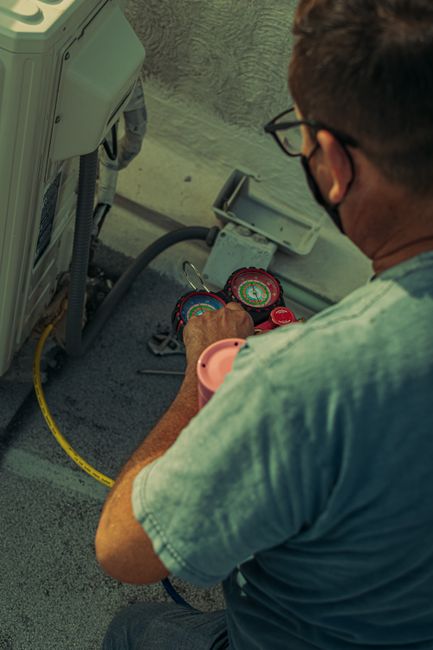
A professional HVAC technician analyzing home ductwork with a thermal imaging camera to detect potential moisture leaks or airflow inefficiencies.
Table of Contents regarding seasonal climate shifts
Preventing mold through smart heating habits is primarily about maintaining enough steady heat to drive moisture out of structural materials. By avoiding wide temperature swings in unoccupied basement areas, you stop the condensation process that provides the ideal environment for spores to take root within your home, protecting both your health and property value.
Efficient air conditioning and airflow
Efficient air conditioning and airflow is achieved when return grilles are kept free of obstruction, allowing the unit to pull in the full volume of air necessary for optimal dehumidification. A steady stream of air through the system ensures that humidity is captured during every single cooling cycle, keeping your home environment consistent.
Your Path to Perfect Home Environments
Your path to perfect home environments involves a holistic view where technology and habit meet to create a stable, healthy living space. By balancing the moisture you encounter in the air, using smart tools consistently, and keeping up with the maintenance of your systems, you foster a home that is truly optimized for respiratory health and total comfort. The difference between a struggling home and one where the air feels just right is often just a matter of having the right device and knowing how to adjust it to current conditions.

An overview graphic showing a home with balanced moisture levels, clean air purification, and optimized temperature settings for year-round internal wellness.
Consulting a local professional for air purifiers
Consulting a local professional for air purifiers provides you with the tailored data required to select units that effectively remove allergens and dust alongside managing your overall moisture levels. Professional guidance ensures you are spending your budget on the specific capabilities that fit your home’s unique floor plan and local climate needs.
Table of Contents regarding seasonal climate shifts
Maintaining relative humidity through heating requires careful control of your thermostat settings to avoid over-drying the air. When you keep your heat at a moderate, consistent level, you create a more stable environment where the moisture content remains steady, supporting better health and respiratory comfort for your entire family.
Refining indoor air standards via air conditioning
Refining indoor air standards via air conditioning is an ongoing process of optimizing your cooling efficiency. Utilizing smart thermostats that feature humidity control settings allows you to refine your standards dynamically, ensuring that the air conditioning system prioritizes both comfort and air quality during the warmest months of the year.
Tracking health benefits with regular checks
Tracking health benefits with regular checks—such as noting how much your allergy or asthma symptoms decrease after installing a new system—is the best way to prove that your investment is working. When you notice you are waking up with less congestion, it is the direct result of having taken control of your home’s air composition, yielding long-lasting health improvements.
How local professional advice improves heating
How local professional advice improves heating is seen through better system integration that considers your specific local weather patterns. Professionals provide insights that help ensure your furnace and humidifier work together efficiently, preventing the moisture-related imbalances that often arise when appliances are simply installed without a holistic, professional plan for your air.
Air conditioning and healthy air standards
Air conditioning and healthy air standards are met when you consistently achieve a dry, cooling effect that keeps your living spaces pleasant. By following professional guidelines for maintenance and ensuring your A/C system is properly sized for your home, you will achieve the clean, temperate air standards that make for a truly comfortable indoor living experience.